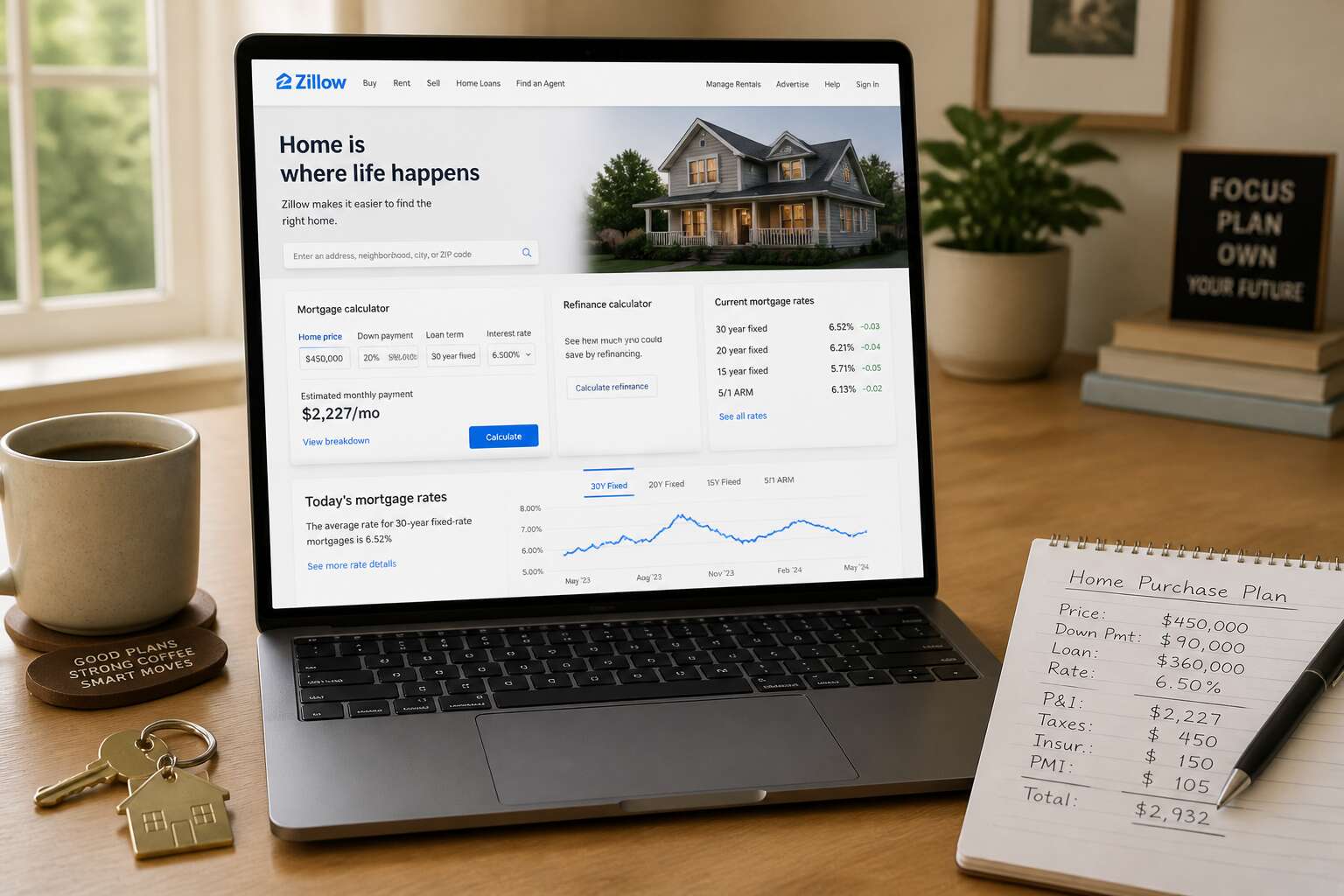
Home loans zillow helps you compare mortgage rates.
Understanding Zillow’s Home Loan Marketplace
How Zillow Connects Borrowers with Lenders
Zillow does not lend money, and that is exactly the point! The American platform runs a marketplace where home loans Zillow connects borrowers with lenders through one online process. For South African borrowers, understanding this model reveals how digital lending is evolving beyond the traditional bank queue.
The mechanics are simple. You enter income, debt, and property details. Zillow’s algorithm matches your profile against lender criteria and forwards your application to partners likely to approve it. The speed impresses! The tradeoff is your data, which fuels targeted advertising.
- You submit one application.
- Lenders receive your financial details.
- Each lender returns a rate quote or follow-up.
Zillow earns its fee from lenders, not from you. That distinction matters when evaluating home loans Zillow, because the platform profits from volume, not approval. For South African buyers, I would say the lesson is to compare offers carefully and treat any digital marketplace as a starting point, not a verdict.
The Role of Zillow Home Loans vs. Zillow Mortgage Marketplace
The key difference lies in who holds the risk. Zillow Mortgage Marketplace is a lead generation system. Zillow Home Loans is a licensed lending arm. For South African buyers exploring home loans Zillow, this distinction determines how your application is processed.
The marketplace sends your details to third party lenders. Zillow Home Loans underwrites the mortgage itself. That means the marketplace profits from referrals. The direct lender profits from interest on your loan.
- Marketplace: multiple quotes, third party underwriting, no direct responsibility.
- Zillow Home Loans: single source, internal approval, direct accountability.
Your credit score still dominates. The platform only changes the route. Home loans Zillow presents two options, each with distinct consequences. The choice rests on your appetite for comparison or convenience.
Key Features of Zillow’s Lending Platform
One in three South African mortgage applications is delayed by incomplete documentation. On Zillow’s marketplace, that research compresses into one interface, pulling live quotes from multiple lenders into a single dashboard. Rates refresh daily, so the morning’s numbers may differ by dusk.
Core features of the marketplace range from anonymous quoting to side by side fee comparisons. A filtering system narrows results by deposit size and loan term. For home loans zillow, the marketplace provides initial offers, not final approval.
- Rate alerts that notify you of shifts
- Lender responses within one business day
- Document pre-upload for faster pre-approval
The direct lending platform focuses on internal underwriting. Proprietary tools assess affordability using South African credit data. A dedicated officer manages your file, and bank statement imports speed up verification. Understanding home loans zillow means knowing these two pathways.
Understanding Zillow’s Lender Network
The marketplace only works if the lenders behind it are solid. Zillow vets participating institutions, but the real filter is transparency. Fees, turnaround times, and deposit requirements sit side by side, and outliers surface quickly. When I search for home loans zillow, I look beyond the interest rate. A lower rate with slow processing can cost you a bond that falls through.
Understanding Zillow’s lender network means knowing who responds. Some lenders specialise in first-time buyers, others in self-employed applicants with irregular income. The network spans established banks and smaller credit providers. For South African borrowers, this mix matters. Your credit profile determines which lender surfaces with a viable offer.
Track records vary by province. Certain lenders process Cape Town bonds faster than Johannesburg ones. The dashboard shows this data, if you read it. A quote is a starting point, not a promise. Lender risk appetite changes monthly, and the marketplace reflects it.
Types of Home Loans Offered Through Zillow
Conventional Loans and Their Requirements
Most buyers assume a 20% down payment is the only path to a conventional loan. That’s rarely true today! Zillow’s marketplace features conventional loans from multiple lenders, each with its own underwriting standards. These loans are not backed by the government, so risk is higher, but the requirements are more flexible than you think.
When you search home loans zillow, you’ll see conventional options with similar baseline demands. Typically, lenders require:
- A credit score of at least 620
- A debt-to-income ratio under 43%
- A down payment as low as 3% if you pay private mortgage insurance
Some lenders will want two years of tax returns. Others might accept a larger down payment to offset a lower score. For South African buyers evaluating US property, expect additional documentation like proof of international income. Comparing home loans zillow terms side by side gives you the clearest view of underwriting expectations.
FHA Loans for First-Time Buyers
FHA loans serve a different purpose entirely. They are insured by the Federal Housing Administration, which means lenders accept more risk. For first-time buyers, that translates into a down payment as low as 3.5% and a credit score requirement near 580. When you scan home loans zillow, FHA options appear with these baseline terms, though individual lenders still set their own overlays.
The trade off is mortgage insurance. You pay an upfront premium and an annual premium, both of which increase your monthly obligation. Still, many buyers find that acceptable for getting into a property sooner.
- Minimum credit score thresholds
- Upfront mortgage insurance premium amounts
- Annual premium rate differences
- Property condition requirements
South African buyers should note that FHA loans have stricter occupancy rules. You must live in the home as your primary residence. Comparing these details on home loans zillow reveals how much variation exists between lenders.
VA Loans for Veterans and Active Military
VA loans cater to a distinct group. Backed by the Department of Veterans Affairs, they are reserved for eligible veterans, active duty members, and certain reservists. On home loans zillow, these loans typically show zero down payment and no monthly mortgage insurance. That combination trims costs for qualifying borrowers.
However, Zillow’s platform functions as a comparison service, not an approval body. It aggregates home loans zillow listings from lenders in its network, each with unique rates and fees. Some demand minimum credit scores near 620; others exhibit flexibility. Borrowers must obtain a Certificate of Eligibility from the VA before applying. Common terms include:
- Funding fee: a one-time charge ranging from 1.25% to ularlah
- Occupancy: primary residence requirement applies.
- Property standards: homes must meet VA minimum requirements.
South African investors with US military backgrounds may find these loans practical, though the appraisal process is stricter than conventional products.
Jumbo Loans for High-Value Properties
Jumbo loans exist for properties whose price exceeds conforming loan limits, which in 2024 reach $766,550 in most US counties. For South African buyers targeting luxury real estate, these loans on home loans zillow require an unusually rigorous financial profile. Lenders inspect income stability, liquid assets, and credit history with exacting standards. Common prerequisites include:
- Credit scores above 720
- Debt to income ratios below 43%
- Reserves covering six months of payments
What sets home loans zillow apart is its ability to surface jumbo lenders with varying risk tolerances. Some prioritize asset documentation over credit history, while others demand pristine scores above 760. Since these loans carry no mortgage insurance, the tradeoff appears as higher interest rates. Comparing multiple offers through the platform reveals stark differences in fees and terms, making it a valuable tool for high net worth individuals.
Fixed-Rate vs. Adjustable-Rate Mortgages
Fixed-rate mortgages anchor your budget to a single number for decades, a rare comfort in an inflationary world. Adjustable-rate mortgages, meanwhile, start with a seductive discount before drifting with market indices, and that drift can be brutal! In South Africa, the Reserve Bank moves rates without warning, exposing ARM borrowers to sudden payment shocks. The home loans zillow platform displays both options side by side, showing initial caps and floor rates that define your risk.
When I assess these options, three factors dominate:
- How long will you stay in the property?
- Can you absorb a payment increase of 2% or 3%?
- Is your income stable enough to survive a rate spike?
How to Apply for a Home Loan on Zillow
Pre-Approval vs. Pre-Qualification on Zillow
Applying for home loans zillow starts with your profile. You enter salary and debts, then choose between two paths. Pre-qualification offers a quick estimate based on what you claim. Pre-approval digs deeper. Here is what pre-approval on Zillow entails:
- A hard credit inquiry
- Document uploads for income and assets
- A conditional loan amount
That last point is crucial! Sellers and real estate agents treat pre-approval as more than a guess. It signals you have passed initial scrutiny. On Zillow, the process is linear and transparent, which is why many buyers start there.
Step-by-Step Application Process
Applying for a home loans Zillow product takes less time than most buyers expect. You manage the entire flow from your dashboard. Start by linking your financial information. From there, Zillow surfaces rates from its lending partners. Once you choose a path, the system prompts you for documents. No faxing. No waiting rooms. Here is the process in plain order:
- Create a profile and enter your purchase price and deposit.
- Receive tailored loan options based on your risk profile.
- Select a lender and submit income and asset documents.
- Track your conditional approval and lock your rate.
Each step builds on the last. A pre-approval completed here flows directly into underwriting. That means home loans Zillow handles the transition from estimate to formal offer without re-entering data. For South African buyers, this clarity helps when comparing timelines across borders.
Documents You’ll Need to Provide
A single missing payslip can stall a mortgage approval for weeks. For home loans zillow, the document list is surprisingly lean, but each item carries weight. Your income profile, asset statements and identity verification form the core of what underwriters examine when you pursue home loans zillow.
Expect to supply two years of tax returns, recent payslips and bank statements showing consistent savings patterns. For self-employed borrowers, additional proof of business income becomes necessary.
- A valid South African ID or passport
- Three months of bank statements
- Latest payslip and employment letter
- Asset statements for any investments
Uploading these directly to the platform speeds up the conditional approval. Zillow’s system scans documents in real time, flagging missing items before you submit. That reduces back and forth. For cross-border buyers, clarity on required paperwork prevents delays when comparing South African and US processes.
Understanding Your Loan Estimate
A loan estimate is the one document you should read twice. When you apply through Zillow, the process is straightforward. You answer questions, upload files, and the system checks your documents against lender rules. Within hours, a loan estimate arrives in your inbox. That document is not a gentle suggestion. It is a binding quote!
The estimate details your monthly payment, interest rate, and closing costs. It also lists prepaid items and lender fees. Pay attention to:
- The APR, which includes fees and shows the true cost
- The cash to close amount, the sum you must bring to settlement
- The interest rate lock period, which protects your rate from market changes
Understanding these figures helps you stay calm when the lender starts talking. That is what matters with home loans zillow, clarity before commitment.
How Long Does Zillow’s Approval Take?
Once you have clarity, applying for home loans zillow requires a steady hand. The form asks for income, debts, and property details. You upload files, and the system compares them against lender criteria. Approval times vary. A pre-approval might appear within minutes. A full underwriting decision can take a day or two. The process offers three potential outcomes:
- A pre-approval letter, ready for house hunting.
- A request for additional documentation.
- A decline, with reasons stated.
The speed depends on how clean your records are. Zillow’s network handles each application with mechanical precision. That efficiency is the quiet reassurance you need.
Comparing Zillow Home Loans with Traditional Banks and Brokers
Zillow’s Rate Comparison Tools vs. Bank Offers
A 0.5 percent rate gap on a thirty year bond can cost you R150,000 in extra interest. That alone justifies ten minutes of comparison work.
Zillow’s rate comparison tools pull live quotes from its lender network and put them on one screen. Traditional banks present a single product, their own. Brokers widen the field but often collect a commission from the lender, which can steer their advice. The automated system behind home loans Zillow is explicit about lender paid fees, so you see the real cost structure right away.
Use the tool to check:
- How different rates change your monthly repayment.
- Whether discount points reduce your long term interest.
- If a no cost loan hides higher annual percentage rates.
Take any quote from home loans Zillow to a traditional bank and ask them to match it. The quote is leverage. It does not require an approval letter or a credit check. Banks respond to competition, and a printed offer from a rival lender is competition. You get that offer without leaving your desk.
Fees and Closing Costs: Zillow vs. Local Lenders
Closing costs are where the real difference emerges. Local lenders often bundle origination fees and third party charges into a single estimate, which makes comparison difficult. Home loans zillow display each cost line item separately, so you can see what actually goes to the lender versus the title company.
Brokers typically earn a commission from the lender, and that fee gets baked into your interest rate. Zillow’s marketplace makes these lender paid fees explicit. That transparency changes how you evaluate quotes.
- Origination fees
- Discount points
- Third party settlement charges
Local lenders may waive certain costs to win your business, but you only know that if you ask. The Zillow quote gives you a baseline to bring back to any bank. With home loans zillow, you are not guessing what you actually pay.
Customer Service and Online Support
Customer service with home loans zillow operates differently from a traditional bank. A local lender assigns you a loan officer who answers questions during business hours. Zillow’s marketplace routes your inquiry through a digital portal, where lenders respond within a day. That speed suits borrowers who prefer asynchronous communication over phone tag.
Online support extends to document handling. Banks often require in-person notarization or faxed paperwork. Zillow’s platform accepts secure uploads, and the loan estimate updates automatically. The tradeoff becomes personal interaction. A broker can explain nuances verbally, while Zillow’s chat transcripts leave a written record. Neither approach is superior, but the difference shapes your experience.
Flexibility in Loan Terms and Conditions
Flexibility in loan terms is the rarest feature in a standard contract. With home loans zillow, you are not confined to one lender’s demands. Traditional banks adhere to fixed underwriting rules. Brokers, meanwhile, work within the boundaries they know. Zillow’s marketplace presents multiple lenders, each with distinct conditions on rate locks, down payments, and prepayment penalties.
I have seen borrowers discover options they thought impossible at their local branch. The platform does not advocate for you; it simply reveals the variations. That visibility, in itself, is a form of power.
Maximizing Your Chances of Approval and Getting the Best Rate
Improving Your Credit Score Before Applying
Your credit score is the first number a lender sees. It sets your interest rate before you ever discuss terms. Every lender on home loans Zillow evaluates those same three digits, so the work you do now matters everywhere at once.
Start by pulling your credit report. Check for errors. Pay down balances. Keep old accounts open. Give yourself at least three months before you apply.
- Set up automatic payments
- Keep credit utilisation below 30%
- Avoid opening new accounts before applying
A higher score translates to a lower rate, and that changes your monthly payment. I’ve seen borrowers shift their rate by half a percentage point simply by cleaning up their credit in advance.
Choosing the Right Down Payment Amount
Your down payment is a strong signal of financial discipline you send to a lender. On home loans Zillow, the amount you put down directly shapes your approval odds and the interest rate offered. A larger deposit reduces the lender’s risk, which often unlocks a lower rate. The right amount, however, depends on your savings and monthly cash flow.
Consider the threshold at which mortgage insurance disappears. A deposit below 20% usually adds this cost. Above that, you save monthly and strengthen your application. Review your total reserves before deciding!
- Emergency funds after the deposit
- Your debt-to-income ratio
- The rate difference at each deposit level
Compare these numbers to find the point where both approval and affordability meet.
Locking in a Favorable Interest Rate
Approval odds and interest rates share a hidden connection. When you compare home loans Zillow, you see rates advertised per lender, but those figures assume a flawless file. The real rate, and the chance of approval itself, depends on how closely your risk profile matches the lender’s internal benchmarks.
Before you lock a rate, consider what happens after the application is submitted. Lenders recheck your employment and credit before funding. A new short-term debt or a missed payment can alter the quoted figure even after the lock. This is why I prioritise stability over speed when securing a rate.
- Rate locks typically run 30 to 60 days, longer if you pay a fee
- Your credit report is pulled again just before closing
- A lower loan-to-value ratio protects against a last-minute rate markup
To get a favourable interest rate, verify that the lock covers the expected closing date with a buffer. If the term expires, you lose the rate. Compare the lock durations across home loans Zillow, not only the advertised numbers, so your approval remains strong until the day you sign.
Using Zillow’s Tools to Negotiate with Lenders
Zillow’s marketplace hands you a rare advantage: the power to see competing loan offers side by side. When you search home loans Zillow, you notice each lender advertises a rate, but the real lever sits in the fine print. I treat every quote as an opening bid, not a verdict. You can push back on fees and rate add-ons with confidence when you hold a competitor’s term sheet in your hand. The strongest negotiation happens with a specific offer in front of you.
Use the platform’s filtering tools to isolate lenders who match your risk profile. Then compare their rate lock policies and underwriting flexibility. A few pressure points worth raising:
– The cost of discount points
– The lender’s tolerance for irregular income sources
– The exact timeline for credit re-pulls before funding
Home loans Zillow turns this transparency into a strategic exchange. The lender knows you have alternatives, and that changes the tone of every follow-up call.
Avoiding Common Application Errors
A misplaced comma on your employment dates can turn a straightforward approval into a three-day review. Underwriters treat every digit like a security code. They have seen applicants list their monthly rent as annual income and then wonder why the system flagged them. The process punishes sloppiness with delays, and delays punish your interest rate.
Common application errors that cause underwriting bedlam:
- Mixing up bank account types on your asset sheet.
- Typing your gross salary where net income belongs.
- Uploading a file that opens as an ancient spreadsheet.
Each mistake adds a revision request, and each revision request eats days off your rate lock. While you stare at your screen, lenders adjust their pricing. A flawless application keeps home loans Zillow moving you toward the best rate without unnecessary delays. Your goal is to bore the underwriter. Bored underwriters approve files quickly.
Timing Your Application for the Best Market Conditions
Maximizing approval odds means making your file the most predictable document an underwriter has seen all week. Consistency in your income trail, bank statements, and declared expenses matters more than any cosmetic tweak. South African lenders scrutinise your credit behaviour across three bureaus, so a dormant store card can cause an unexpected decline.
Timing your application for the best market conditions is equally practical. Watch the South African Reserve Bank’s quarterly projections. Rates often dip slightly in the weeks after a hold announcement. Home loans zillow shows real-time offers, but your approval date dictates which offer you actually receive. A Thursday afternoon application may hit a weekend freeze. A Tuesday submission gives underwriters a full week without pressure.
Common Pitfalls and How to Avoid Them When Using Zillow
Understanding Hard vs. Soft Credit Inquiries
Most borrowers assume Zillow’s quote tool is harmless. A soft credit inquiry won’t touch your history, but a hard pull can drop your score a few points. The common pitfalls include assuming every quote is soft, submitting to multiple lenders at once, and skipping the fine print on inquiry types.
Understanding hard versus soft credit inquiries changes how you use home loans zillow. Each hard inquiry from a different lender adds up. A two week rate shopping window is treated as one search by credit bureaus, which limits the damage. Without that knowledge, a single afternoon of browsing can leave several inquiries on your file.
Avoiding Predatory Lenders in Zillow’s Network
When you explore home loans zillow, the sheer number of lenders can feel overwhelming. Not every lender in the network prioritises your financial wellbeing. Some operate with aggressive sales tactics, pushing costly add-ons or higher rates than you qualify for.
Spotting predatory behaviour starts with the loan estimate. A lender who avoids providing one, or pressures you to sign before you compare offers, deserves scrutiny. Watch for prepayment penalties in the fine print. These clauses punish you for refinancing or selling early. When you compare home loans zillow options, keep these warning signs in mind:
– Requests for upfront fees before any application review
– Pressure to inflate your income on the application
– Offers that seem far better than every other quote
A legitimate lender welcomes questions about the loan terms. If a representative deflects or rushes the conversation, move on. Your financial future depends on finding a partner who values transparency over the quick sale.
What to Watch Out for in Loan Estimates
Nearly 40% of borrowers overlook line item variances in their loan estimates. When you use home loans zillow, the estimate you receive may carry assumptions that shift after you commit. I have seen estimates where the interest rate appears fixed, but the fine print ties it to a discount point purchase.
- Verify the lender credits actually appear as negative numbers.
- Check whether the cash to close includes escrow deposits.
- Compare the annual percentage rate against the quoted rate.
These pitfalls surface when you compare zillow’s loan options side by side. The estimate’s structure allows subtle omissions, such as missing recording fees. Read every line, not the summary box. The true cost of a mortgage hides in these details!
Managing Your Timeline for Closing
Closing timelines on home loans zillow can feel like a puzzle where the pieces keep moving. One week you are waiting on appraisal, the next the underwriter requests a document you already sent twice. The estimate you saw rarely reflects the final schedule.
- Ask each lender for their average closing time in writing.
- Confirm whether your rate lock expires before the projected closing date.
- Set aside at least three days for the final review of closing documents.
I have seen borrowers schedule movers before the loan funds. That mistake costs money! When using home loans zillow, compare the estimated closing date with the lender’s actual capacity. Small delays compound.