Building home loans South Africa: your guide to construction financing.
Understanding Building Loans in the South African Housing Market
What Defines a Building Loan
Building a home in South Africa often feels complicated. A building loan, unlike a standard mortgage, releases funds in stages as your construction progresses. That means you pay interest only on the money actually drawn, not the full approved amount. In my experience, many buyers underestimate the value of a proper bank valuation before the first brick is laid.
What truly defines building home loans south africa is the process of disbursement. You do not receive a lump sum. Instead, you receive payments tied to completed milestones. Typically, those milestones include:
- Foundation works
- Structural frame
- Roof and finishes
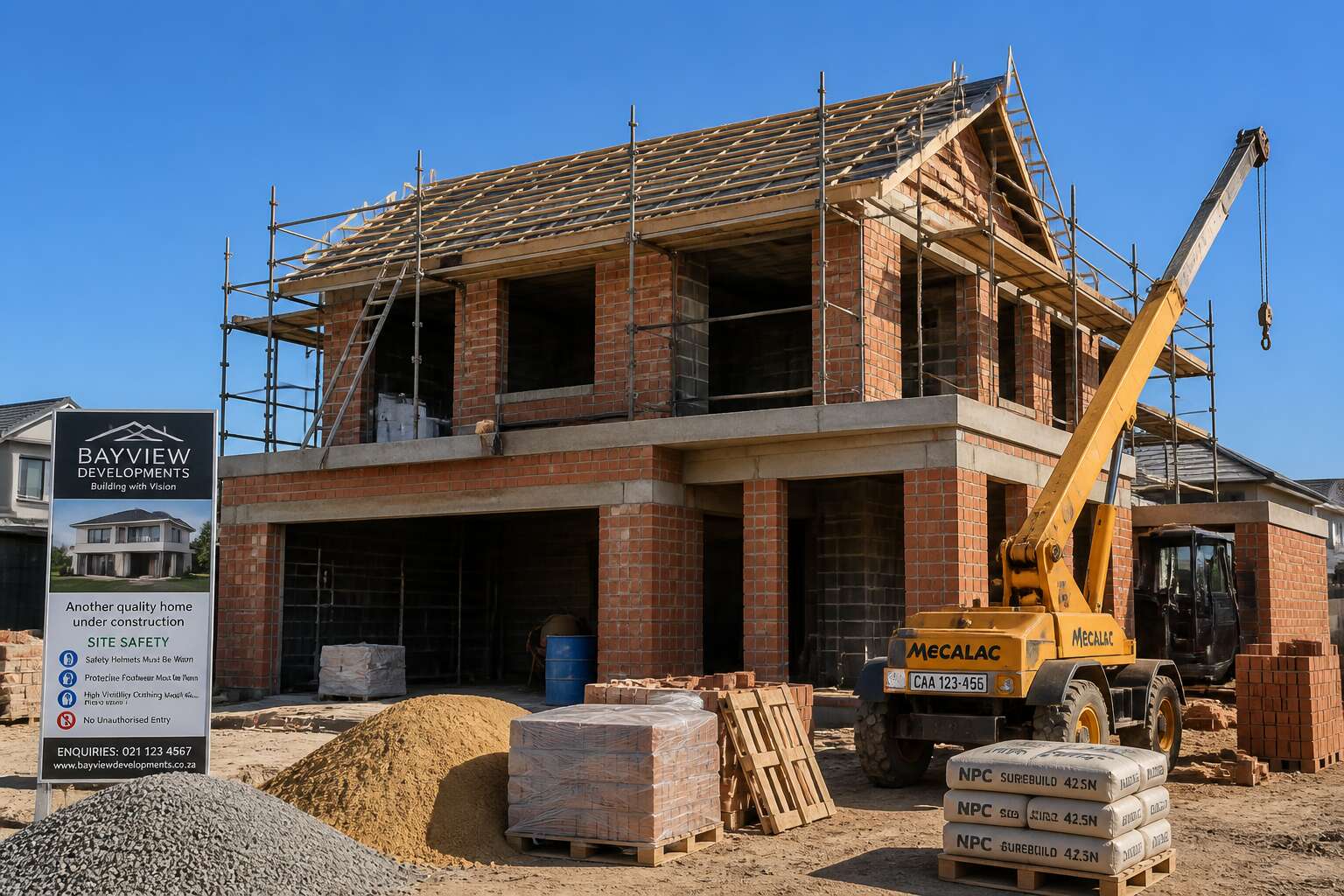
For anyone exploring building home loans south africa, this staged process is both a safeguard and a test of patience. Each stage requires an architect’s certificate to unlock the next portion of funding. That structure protects both you and the lender, but it demands careful cash flow planning.
How Building Loans Differ from Standard Home Loans
I notice how building home loans south africa behave differently from standard home loans. A standard home loan is a lump sum handed over on registration day. A building loan, by contrast, requires you to prove your house actually exists before the bank releases another cent.
Some differences stand out!
- The standard loan pays for a completed property. The building loan pays for your promise to finish one.
- The standard loan is priced on the property’s current value. The building loan uses a valuation that assumes you build exactly what the architect drew.
That distinction matters. The bank’s money is tied to the project’s progress, so your credit file gets reviewed at every stage.
Key Terms and Features Unique to Construction Financing
Building your own home in South Africa is an exciting prospect. You get to design every detail, choose your finishes, and watch your vision come to life on a plot of land. However, financing a construction project is a different beast compared to buying a completed property. The type of loan you need is not a standard home loan; it’s a building loan, and understanding the difference is critical before you break ground.
At its core, the distinction between the two comes down to a single, fundamental issue: disbursement. A standard home loan for an existing property is a straightforward transaction. The bank pays the full purchase price to the seller on the transfer date, and you begin paying off the total capital amount from day one. Your bond is registered against the property, and you move in.
A building loan, also known as a progress payment loan, operates on a completely different principle. The bank does not hand over the entire construction budget upfront. Instead, it pays the money out in a series of staged payments directly to your builder. These payments are tied to specific milestones in the construction process. The bank will typically release funds in phases—commonly starting with the foundation, then the roof, then plastering, and finally the finishing touches. At each stage, an independent valuer is sent to the site to verify that the work has been completed satisfactorily before the bank releases the next tranche of money.
This difference in disbursement creates a significant difference in how you pay for the loan. With a standard home loan, interest is charged on the full loan amount from the moment the bond is registered. With a building loan, you only pay interest on the money that has been paid out to the builder so far. During the construction phase, your repayments are interest-only on the drawn amount, which makes the initial financial burden much lighter. However, once the final payment is made and the house is completed, the loan is “converted” into a standard home loan. Your bond is then capitalised, and you begin making full bond repayments on the entire amount, amortised over the loan term.
Another key difference lies in the application and approval process. Qualifying for a building loan is often more rigorous. The bank needs to assess not just your creditworthiness, but also the viability of the project. You will need to provide a detailed set of architectural plans, a bill of quantities (BOQ) from a professional quantity surveyor, and a fixed-price contract from your registered builder. The bank will also valuate the land and the completed home’s projected value to ensure the loan amount is justified. With a standard home loan, the process is more streamlined, as the property’s value is simply based on its market value in its current state.
Risk management also plays a crucial role in how these loans are structured. For a standard home loan, the bank’s risk is the property’s market value. For a building loan, the risk profile is different. There is a chance your builder could walk off the job, leaving an unfinished property worth less than the total sum advanced. To mitigate this, the bank is strict about the builder’s qualifications and will only release funds in arrears, meaning the builder has to fund the work before they are reimbursed. This protects the bank and ensures the property is steadily gaining value as the loan is drawn down.
In essence, choosing the right financing hinges on your project. If you are buying a move-in-ready home, a standard home loan is your tool. But if you are purchasing a plot and undertaking construction, you need a building loan. It offers a cash-flow-friendly structure that aligns with your project milestones and protects both you and the lender from the pitfalls of unfinished construction. Before you start, speak to your bank or a bond originator who specialises in building projects, and ensure you have all your architectural and builder documentation in order. This groundwork will make the financial process as smooth as the plastering on your new walls.
Eligibility Criteria and Required Documentation
Income Requirements and Credit Score Benchmarks
Aspiring builders in South Africa often discover that qualifying for building home loans requires more than a good credit score. Lenders want proof of a stable income, typically two years of consistent employment or business income. They also expect a loan-to-value ratio of at least 80%, meaning you need a substantial deposit or land equity.
Your credit record must show a score above 600, and total debt should stay under 30% of your gross monthly income. For building home loans South Africa, the required documentation typically includes:
– A valid South African ID
– Recent bank statements and payslips
– Approved building plans and quotations
– A title deed for the land
That’s the framework most banks use when assessing applicants. Gathering these documents early can speed up the process considerably.
Essential Documents for the Application
The approval of building home loans south africa begins with what you hold, not only what you earn. Lenders examine the land: a registered title deed, residential zoning, and NHBRC enrolment for the project. Without these, a flawless financial record falters.
Beyond ownership, the application demands proof that your plans are lawful and your builder is credible. The essential documents for the application include:
- Approved building plans from the local municipality
- A detailed quotation from a registered contractor
- Copy of your ID and proof of residence
- Building contract and NHBRC fee receipt
Assemble these before approaching a bank. Building home loans south africa are granted on the strength of preparation, and a complete file often turns hesitation into a swift approval.
Approved Building Plans and Contractor Certifications
One missing stamp can sink an application faster than a bad credit record. That catches more builders than they expect.
Approved building plans are the first evidence. They must be current, sealed by the municipality, and aligned with the National Building Regulations. The lender may even verify these before studying your salary. Contractor certifications carry the same weight. No NHBRC registration, no financial guarantee, no loan.
Building home loans south africa rest on two proofs: the plan is lawful and the builder is credible. The deposit usually lands between 15 and 20 percent of the total cost, but that is a later conversation.
– Approved plans with a fresh municipal stamp
– Contractor NHBRC enrolment and compliance certificate
– A valid building contract with a warranty clause
That is the foundation of eligibility.
Deposit Amounts and Loan-to-Value Ratios
For building home loans south africa, the lender’s arithmetic begins with your contribution. The deposit typically ranges from 15% to 20% of the total build cost, though this figure bends with your credit profile and the lender’s appetite for risk. A larger deposit shifts the loan-to-value ratio in your favour, improving your interest rate and reducing the monthly burden.
Eligibility extends beyond the plan approvals we covered earlier. Lenders scrutinise your debt-to-income ratio, your savings behaviour, and the permanence of your employment. Required documentation often includes three months of bank statements, a recent payslip, and a provisional quotation from your builder that itemises materials and labour.
Some lenders:
- Cap the loan-to-value ratio at 85% for construction
- Release funds in tranches tied to progress milestones
- Require the first tranche to cover only the foundation works
Understanding these thresholds before applying for building home loans south africa keeps the process honest. Settle the deposit conversation early, and the rest follows with fewer surprises!
Additional Conditions for Self- and Owner-Builders
Before applying for building home loans south africa, eligibility goes beyond a pay stub. Lenders assess the land itself. The property must have municipal approval for a dwelling, and the title deed must be free of servitudes that block construction. For owner-builders, the bank evaluates your project management history. Have you completed a build before? Without that record, you will need a registered professional to oversee disbursements.
Documentation differs from a standard purchase. You need architectural plans stamped by the local authority, a valid building contract, and a detailed cost breakdown with a 10% contingency buffer. Proof of land ownership and compliance certificates for electrical and plumbing works also apply.
Additional conditions often target self-builders:
- A phased release of funds, with inspector sign-off before each payment.
- A mandatory completion date, with penalties for delays.
- A retention amount held until the municipality issues an occupancy certificate.
Missing any one of these points can stall your entire building home loans south africa application.
Exploring the Different Types of Building Loans
Fixed versus Variable Interest Rate Options
Choosing between fixed and variable interest rates for building home loans south africa means weighing certainty against potential savings. A variable rate tracks the repo rate. It goes up, your instalment grows. It drops, you pay less. Fixed rates freeze your payment for a set period. That stability helps when contractors request progress payments.
Your build timeframe matters. Short builds of six months often suit variable rates because rate movements stay limited. Longer projects, especially those facing delays, benefit from fixed terms.
These points guide most borrowers:
- The starting rate difference
- The expected rate trajectory
- Your budget tolerance for monthly shifts
I have watched clients sweat over rate movements. The variable option feels like a gamble, but fixed rates often carry a premium. The real decision rests on your project length and future income certainty.
Construction Stage Payment Structures
Most building home loans south africa run on a milestone-based disbursement system. Rather than handing over the whole approved amount at once, the lender releases funds in tranches tied to construction progress. A standard structure covers foundations, structural brickwork, roof installation, and final finishes. Each drawdown requires a signed-off inspection from your architect or a qualified surveyor.
Some lenders pay in arrears, reimbursing you after each stage is completed. Others advance the funds before work begins so you can buy materials and pay contractors on time. During the build, you only pay interest on the amount already drawn, not the full loan facility. This keeps your early monthly costs lower while the property is still unfinished. The exact percentages vary by lender, but common ranges look like this:
- Foundation: 20% to 30%
- Structural brickwork: 20% to 30%
- Roof and windows: 15% to 20%
- Plumbing and electrical: 10% to 15%
- Final finishing and handover: remaining balance
Understanding the payment structure matters because it affects your cash flow and interest charges. A delayed inspection can stall the next tranche, so plan your build schedule around the lender’s verification process.
Interest-Only Loans During the Building Phase
Building home loans south africa often leave first-time builders staring at spreadsheets in confusion! My favourite option is the interest-only loan during construction, because it delays capital repayments until the build is done. You only pay interest on the amount actually drawn down, which keeps early monthly costs bearable. Some lenders offer fixed interest-only rates for the entire building phase, giving certainty against prime rate hikes. Others use a variable rate, meaning your monthly interest bill can fluctuate as Reserve Bank moves.
Common variations include:
- Fixed for the whole build period
- Convertible to a standard home loan at completion
- Tied to prime with a margin
Most importantly, remember that interest-only doesn’t reduce the principal. When construction ends, the loan converts to a normal repayment home loan and your monthly obligations jump. Make sure your budget anticipates that jump, or you’ll have a problem!
Government-Backed Housing Subsidies and Programs
Government backed housing subsidies can transform building home loans south africa into genuinely attainable objectives. The Finance Linked Individual Subsidy Programme, better known as FLISP, offers qualifying purchasers a cash injection based on their monthly earnings. I have seen applicants apply it directly against the capital amount, which lowers the required deposit and shrinks the bond size.
Other avenues exist too:
- The Housing Subsidy Scheme, aimed at first time homeowners earning below R3,500 monthly
- Provincial and municipal top up grants for gap market buyers
- VAT zero rating on new residential builds under specific conditions
Each programme carries its own income ceiling and property value cap. The paperwork can feel relentless, but a bond originator or housing officer can point you toward whichever support fits your actual circumstances. Just be careful with approval timelines, because subsidy disbursements rarely align with construction milestones. That mismatch has derailed more than one self builder I know!
Green and Energy-Efficient Building Loan Alternatives
Eco-friendly construction is now a financial advantage, not an ethical choice. Green building loans are reshaping how South Africans finance their homes. These alternatives focus on long-term utility savings and lower environmental impact. Lenders now reward designs that incorporate solar power, efficient water heating, and insulation.
When comparing building home loans south africa, you will find products tailored to these builds. Look for these key features:
- Interest rate discounts for verified energy-efficient certifications.
- Increased loan amounts to cover solar installations and heat pumps.
- Dedicated green bonds that allow for flexible repayment terms.
Accessing these options requires a detailed energy report from an approved assessor. This report proves your build meets necessary standards. The application process follows a similar path to standard construction finance, but the benefits are substantial. You can secure a larger budget while lowering monthly operational costs over the home’s lifetime!
Bridge Loans for Land Purchase and Construction
Bridge loans fill a specific gap: you have secured a plot but your current property has not sold. These facilities allow you to buy the land immediately, with interest payments only until the sale completes. In the local market, building home loans south africa often work this way. Lenders assess the bridge loan against your existing property’s value. You need a signed offer or an agent’s confirmed mandate. The funds cover the land purchase and sometimes early site costs.
- The loan term runs from six to twelve months.
- Construction can start once the land transfer is registered.
- Repayment structure shifts to a standard building loan after the sale.
This type of financing suits buyers with equity in their current home. Without that equity, lenders will likely decline the application. Understanding these mechanics helps you navigate building home loans south africa without stalling your project.
Step-by-Step Application and Approval Process
Getting Pre-Approved before Purchasing Land
The building loan process in South Africa differs dramatically from a standard home loan. A standard bond releases a lump sum to the seller. A building loan, however, distributes funds in scheduled payments, known as progress payments. This ensures the lender protects its investment as construction value increases. Here is the crucial process you need to navigate.
The Step-by-Step Loan Process
Applying for a building loan is structured into distinct phases.
First, you submit your building plans to the bank. The bank then appoints an independent valuer to inspect the land and verify the proposed project. This is not a cursory check. The valuer assesses the construction costs to establish the “fair value” of the property upon completion.
Once approved, the bank activates your loan account. Then, the contractor begins work. The drawdown process is strict. Your architect or surveyor must inspect each completed phase and sign off on the work. The bank then pays the contractor directly, usually within 72 hours of receiving the approval.
Getting Pre-Approved Before Purchasing Land
You must secure financing before you sign any offer to purchase. This step is critical. Without pre-approval, you risk losing your deposit or facing severe penalties.
Pre-approval confirms your creditworthiness and the maximum loan amount you qualify for. It gives you a budget. It also makes your offer more attractive to sellers. You need to contact the bank and request a pre-approval certificate. This involves a full credit check and requires the land’s details. This certificate is usually valid for three months. If you do not buy land within that time, you must re-apply.
Essential Documents and Approval Criteria
Banks in South Africa require rigorous documentation for building loans. Prepare a complete file.
– Full Building Plans: Professionally drawn and approved by your local municipality.
– Signed Building Contract: A fixed-price contract from a registered builder.
– Builder’s Qualifications: A valid NHBRC registration is non-negotiable.
– Quantity Surveyor’s Report: Confirms the total cost and the projected valuation.
– Comprehensive Quote: Must include all fixtures, finishes, and lighting.
– Proof of Income: Recent payslips and three months of bank statements.
The approval criteria also include your debt-to-income ratio. The bank allows a maximum monthly bond repayment of around 30% of your gross salary.
Upfront costs require planning. You will need a 10% deposit if borrowing more than 80% of the property value. You also pay bank initiation fees and legal costs. Budget for these separately.
Ask about interest rates. Building loan rates are usually prime plus a margin, depending on your loan-to-value ratio. The interest is often higher during construction because the property is not yet a fully secure asset.
Review the “sunset clause” for valuation. Construction costs often rise. The bank’s initial valuation is based on your submitted plans. If costs exceed the valuation, you must bridge the shortfall in cash.
Selecting the Right Lender and Loan Product
The application journey for building home loans south africa is methodical, not mystical. You submit your plans, pay the valuation fee, and wait for the risk department’s ruling. That ruling depends on the valuer’s report, your credit record, and the contractor’s NHBRC registration. Approval times vary between lenders. Some take a week, others three. Ask upfront!
Selecting the right lender requires comparing more than interest rates. Consider the lender’s drawdown process and how quickly they pay invoices. A slower bank stalls your contractor. Look for a lender who understands construction finance and offers a dedicated building loan consultant.
When comparing lenders, inspect these details:
- The margin above prime for your loan-to-value ratio.
- Their progress payment schedule.
- The valuer’s approach to unbuilt improvements.
That comparison determines whether your project glides or stumbles.
Submitting Building Quotes, Plans, and Contracts
The approval ritual for building home loans south africa hinges on a paper trail that is scrutinized line by line. Your submission starts with the approved municipal plans, stamped and current. Next come itemized quotes from registered suppliers, not vague estimates. A contractor’s contract, signed and dated, must align precisely with those quoted figures.
Lenders review these documents for cost escalation clauses and hidden allowances. They check that the contractor’s NHBRC registration number appears on the contract. If the quote lumps materials and labour together, the valuer may reject it. The bank needs a clear breakdown to assess the unbuilt value accurately.
– Approved plans with the correct municipal stamp.
– Itemized quotes from registered suppliers and subcontractors.
– A signed building contract that matches the quoted amounts.
The risk department compares your total project cost against the property’s final value. A mismatch, even a small one, stalls the approval. Getting this dossier right means the difference between a first-time yes and a three-week resubmission cycle. The paperwork gates every drawdown that follows, so precision here sets the tempo for your entire build.
Valuation and Legal Compliance Checks
Applying for building home loans south africa moves past paperwork into the valuation phase. The lender dispatches a valuer to assess the land and existing structures. This visit determines the unbuilt value, which directly affects how much you can borrow. A plot with access to services scores better than one without. Valuation also flags zoning discrepancies.
Legal compliance follows. The bank’s attorneys verify title deeds, servitudes, and municipal levies. They confirm the property stands in a proclaimed township. Any unresolved bond or judgment against the seller kills the deal early. Here is what typically gets checked:
– Title deed authenticity
– Zoning and land use rights
– Outstanding rates and taxes
Each check protects the bank from future disputes. For building home loans south africa, these steps separate a smooth approval from a stalled one. The process feels invasive, but it exists to secure every rand lent against your unfinished walls.
Understanding the Final Offer and Loan Agreement
The final offer arrives after the bank’s internal credit committee signs off. This document sets the approved capital, the interest rate, and every condition tied to your building home loans south africa. Reading it twice is not paranoia; it is prudence. The loan agreement will specify drawdown dates, progress payment triggers, and the contractor’s certification requirements.
Check the fine print for early settlement penalties and escalation clauses. The bank may also cap the total payout at a percentage of the completed value. Here is what demands your attention:
- The expiry date of the offer
- The prime-linked interest rate or fixed rate period
- The retention amount held until final municipal inspection
Sign only when every detail matches the builder’s contract. Once signed, the offer becomes a binding agreement and the construction phase begins under the bank’s supervision. Building home loans south africa rest on this document, so read it as carefully as you reviewed your plans.
How Progress Payments Are Disbursed During Construction
Building Home Loans South Africa: A Complete Guide to Financing Your Build
Understanding the Process, Costs, and Key Requirements
Building your own home in South Africa is an exciting prospect, but it requires a different financing approach than buying an existing property. Building home loans South Africa are designed to accommodate the unique cash flow needs of construction projects, releasing funds in stages as your home takes shape. This guide covers the essentials to help you secure the right finance for your project.
The Step-by-Step Application Process for Building Home Loans South Africa
The application process for building home loans South Africa differs from standard bond applications. Lenders require more detailed documentation and a clear understanding of the construction timeline. Financial institutions typically ask for a full set of architect-approved building plans, a detailed bill of quantities from a qualified quantity surveyor, and a fixed-price contract from a registered builder.
Most South African banks follow a similar approval flow. First, they assess your creditworthiness, verifying your income, existing debt, and affordability against the total project cost. Second, they review the building plans and the contract with your builder to confirm the total estimated costs are realistic. Third, they arrange a professional evaluation of the land, which is usually already owned, to determine its current market value. The loan amount is often based on a loan-to-value ratio that considers both the land value and the projected completion value.
Approval can take between two and six weeks, depending on the complexity of your plans and the speed at which your documentation arrives at the bank. Ensure your building contract includes clear milestone dates and cost breakdowns, as these specific terms will form the basis of your loan agreement.
How Do Building Home Loans South Africa Differ from Standard Home Loans?
The primary difference between a standard home loan and a building loan is how the funds are paid out. With a standard bond, the bank pays the full purchase price to the seller on the date of transfer. With building home loans South Africa, the bank pays out the money in predefined stages. These regulations protect both the borrower and the lender by ensuring funds are only released for completed work.
A typical payment schedule might look like this:
– Stage 1: Foundation – 20% of the total loan amount
– Stage 2: Brickwork and roofing – 30% of the total loan amount
– Stage 3: Internal plastering and ceilings – 25% of the total loan amount
– Stage 4: Finishing (tiling, plumbing, electrical) – 15% of the total loan amount
– Stage 5: Final occupation certificate – 10% of the total loan amount
This structure creates a built-in inspection schedule. The bank will send a valuator to the site before each payment is released to verify that the work corresponds to the agreed milestone. This often results in a better-managed build, as it provides an external verification of work quality before the next phase is funded.
However, the crucial distinction is that while you only pay interest on the amounts already paid out, the bank usually charges a higher interest rate for building loans compared to conventional bonds. This premium covers the additional administrative oversight and progress monitoring, so it is essential to budget for this higher rate when applying.
Managing Interest and Retentions During the Construction Phase
One of the most frequent misunderstandings about building home loans South Africa is the payment of interest during construction. Throughout the building period, you only pay interest on the capital already drawn down, not on the entire approved amount. If the first progress payment equals 20% of the loan, your monthly interest bill is calculated on that initial 20%. As the bank releases more tranches, your interest amount increases, naturally aligning with the growth of your investment.
Another critical aspect is the retention clause. The bank typically ensures the final 10% of the loan is not disbursed until the builder has provided a completion certificate and the local municipality has issued an occupation certificate. This retention acts as a safety net, covering any latent defects that may appear in the first few months. After a specified period, for example, three months, the bank releases this final amount once the property is deemed fully compliant.
To manage your finances, it is wise to budget for the interest payments that accrue during the build. Many borrowers choose to capitalise these interest amounts, adding them to the final loan balance at the end of the project. Alternatively, you can pay the interest monthly out of pocket, which reduces the overall loan balance upon completion. Discuss these options with your lender to see which approach suits your cash flow.
Bearing the Costs for Self-Managed or Contractor-Only Builds
When you manage your own build, you act as the project manager and hire subcontractors directly. While this approach can save money, it complicates the loan approval process. Most banks prefer working with a single registered builder who is financially accountable for the completion of the project. If you choose to self-manage, you must provide the bank with an indemnity form and a detailed construction schedule.
The bank will still perform site inspections at key intervals, but they become more lenient regarding who signed the contract. This flexibility allows you to buy materials and pay labour as you progress. However, the responsibility for cost overruns lies squarely on your shoulders. If you run out of funds before the build is complete, the bank is unlikely to advance more money without additional security, such as a mortgage bond over another property or a surety from a third party.
It is prudent to maintain a contingency reserve of at least 10% of the total budget. This reserve covers unforeseen costs like rock blasting, soil stabilisation, or price increases in materials. A well-prepared borrower will have this fallback ready, ensuring the project doesn’t stall due to a temporary lack of liquidity.
Choosing Between Interest-Only and Capital Repayment Loans
During the construction phase, building home loans South Africa are typically interest-only. This means your monthly repayment covers the interest charges without reducing the outstanding capital. Once the final occupation certificate is issued, the loan builds out to a normal capital repayment bond. The transition to full repayment is automatic, but your instalment will change significantly, so you should plan accordingly.
Some lenders offer a construction loan that converts immediately into a standard mortgage after completion. This continuous progression allows you to start repaying the capital as soon as the building is habitable. You can often negotiate a cap on the interest rate for the first year of construction, giving you certainty while the project is ongoing. Compare several offerings from major banks to ensure you get the most competitive terms for your financial situation.
Key Institutions Providing Building Home Loans South Africa
Several major financial institutions dominate the market for building home loans South Africa. Standard Bank, Absa, FNB, and Nedbank all offer specialised building loan products. Each lender has its own criteria for progress inspections and payment releases. While some banks require a specific construction contract form, others accept any legally binding agreement with standard terms.
Beyond the big banks, alternative lenders like SA Home Loans also provide building finance options. These institutions often offer competitive rates for borrowers with excellent credit records. However, they may have stricter requirements regarding the builder’s credentials and the project’s location. It is advisable to request quotes from at least two institutions, comparing not only the interest rate but also the service levels required for progress inspections and the availability of online progress tracking.
In conclusion, securing building home loans South Africa requires attention to detail, a strong credit profile, and a clear understanding of the construction payout process. By choosing the right lender and the correct loan structure, you can build your dream home without unexpected financial pressure.
This article intends to provide general information about building home loans South Africa and does not constitute financial advice. Lending criteria, interest rates, and fees are subject to change and the terms set by each individual financial institution. Direct any financial decisions to a professional mortgage originator or a qualified financial advisor regarding the current terms and regulatory requirements.
Managing Costs and Avoiding Common Pitfalls
Overview of Initiation Fees, Legal Costs, and Duties
A house is a hollow promise until the foundations are poured, but the true price of that promise often hides in the ledger sheets before the first brick is laid. When securing building home loans south africa, borrowers frequently fixate on the interest rate, allowing ancillary charges to ambush their budget. The initiation fee, a once off cost levied by the bank for processing your application, can range between R 5 000 and R 25 000 depending on the lender. This is not a negotiable afterthought, but a primary consideration.
Legal costs represent a separate, unavoidable spectre. The bond registration attorney charges a fee calculated on a sliding scale set by the Legal Practice Council, which for a R 1.5 million bond can exceed R 30 000. You are not merely paying for their signature, but for the intricate deed of substitution and the diligent search for existing servitudes or caveats on the title deed. A failure to budget for these expenses derails the entire project before construction commences.
- Initiation fees: Flat administrative charge by the lender.
- Bond registration costs: Attorney fees for the deeds office.
- Transfer duty: A government tax, often applicable if you purchase the land separately.
- Post cancellation fees: Costs if you switch banks or refinance later.
Beyond the bank’s coffers, the state claims its due. Transfer duty applies to the land purchase, though a first time buyer exemption exists for properties under a certain threshold. Mortgage indemnity insurance, often hidden in the fine print, protects the bank against default, yet the premium is yours to carry. For building home loans south africa, the total upfront liquidity required to close the deal typically sits at 15% of the property value, a figure that excludes the deposit itself. Review every line item with suspicion, for the true cost of construction is always a sum of its quietest parts.
Understanding Interest Accumulation and Progress Drawdowns
Interest on building home loans south africa does not wait for completion. It accrues from the moment the bank advances the first progress payment, and it capitalises monthly. This means the interest on interest becomes part of your debt before the roof is even framed. A R 100 000 drawdown at 10% interest costs roughly R 833 in the first month alone, if unpaid.
Progress drawdowns themselves carry hidden traps. Contractors may inflate invoices to trigger a draw, leaving you to pay for work not yet verified. Inspections happen before payment, but delays in validation can stall the site and trigger penalty clauses.
– Confirm whether interest capitalises or if you can make interest-only payments.
– Insist on independent valuations before each drawdown.
– Track every draw against your original build budget.
The discipline here decides whether your building home loans south africa journey ends in a finished house or a half built shell.
Insurance and Tax Considerations for Building Loans
Building your own home in South Africa is a test of financial discipline. The true cost of a project is rarely the quote on paper, and interest capitalisation amplifies every mistake. When you apply for building home loans South Africa banks offer, the monthly repayment is often the only figure borrowers consider, but the real challenge is the cash flow during the twelve to eighteen months of construction.
Successful self-builders treat their budget like a fortress. A contingency of 10% is the bare minimum, and 15% is safer because material prices shift without warning. You must also verify every stage claim. A contractor might invoice for plumbing that is merely roughed in, not completed. Release funds only after your independent inspector signs off on the work, because once that money is paid out and capitalised, you are paying interest on it for the next twenty years. The financial safeguards are straightforward:
– Demand a detailed bill of quantities before signing anything
– Avoid variations during building; finish the design before you start
– Keep a separate savings buffer for unexpected site conditions like rock blasting
Insurance is a non-negotiable expense from day one. A standard homeowner’s policy will not cover a vacant stand or a half-finished structure. You need building construction insurance, which covers theft of materials, damage by weather, and liability if a contractor gets injured on site. The premium is small compared to the risk of losing your uninsured investment to a fire or a flood while the roof is still open.
Tax is the silent budget killer. If you are building to occupy the home yourself, you cannot claim VAT back on building materials or contractor fees. However, if you build to sell, the profit is taxable as revenue, and you can claim input VAT. Interest paid on the loan during construction is also capitalised and added to the cost of the property, which reduces your capital gains tax liability when you eventually sell. Keep every receipt and invoice for these calculations; you will need them at tax season.
Dealing with Construction Delays and Budget Overruns
Construction delays in South Africa are routine. The country’s weather, supplier lead times, and municipal approval queues all extend your timeline. Even the most meticulous contractor can lose weeks waiting for steel or waterproofing. When you build with building home loans south africa, every idle day still accrues interest on your progress drawdowns. That interest becomes part of your loan balance, so delaying costs double!
I have watched projects where a single late shipment of cement caused a series of rework. The painters arrived, but the electrician had not finished, so they left and returned, invoicing mobilisation fees each time. To avoid these pitfalls, treat the builder’s programme as a contract document. Review it weeklyilyallyand document every setback in writing. A two-week rain delay is not force majeure ifthe contract lacks that clause. Common cost drivers include:
- Material price escalation
- Underestimated labour
- Hidden site conditions
Set aside a contingency beyond the 10% benchmark, because quarriesand fill are unpredictable. Insist on stage inspections before paying, as provisional sums often mask incomplete work.
Refinancing Options at the End of the Building Process
Once the final brick is laid, the financial focus shifts from drawdowns to refinancing. Your building home loans south africa have carried you through construction, but a standard home loan often offers a lower interest rate once the property is complete. Before you refinance, audit the final account carefully. Builders sometimes include costs that were never agreed upon. Look for these common pitfalls:
- Variation orders that lack written approval
- Provisional sums adjusted without supporting invoices
- Materials charged but never delivered to site
A simple ledger of payments, compared with the contractor’s claims, will reveal discrepancies. Refinancing also triggers a new bank valuation. That valuation can work in your favour if property prices have risen, giving you equity to consolidate debt or fund renovations! However, beware of early termination penalties on your current building loan. Some lenders charge a fee if you switch within a certain period. Ask for a settlement statement before you commit. The process is straightforward, but only if you know what to look for. In my experience, borrowers who track every expense from day one are the ones who get the most out of building home loans south africa.