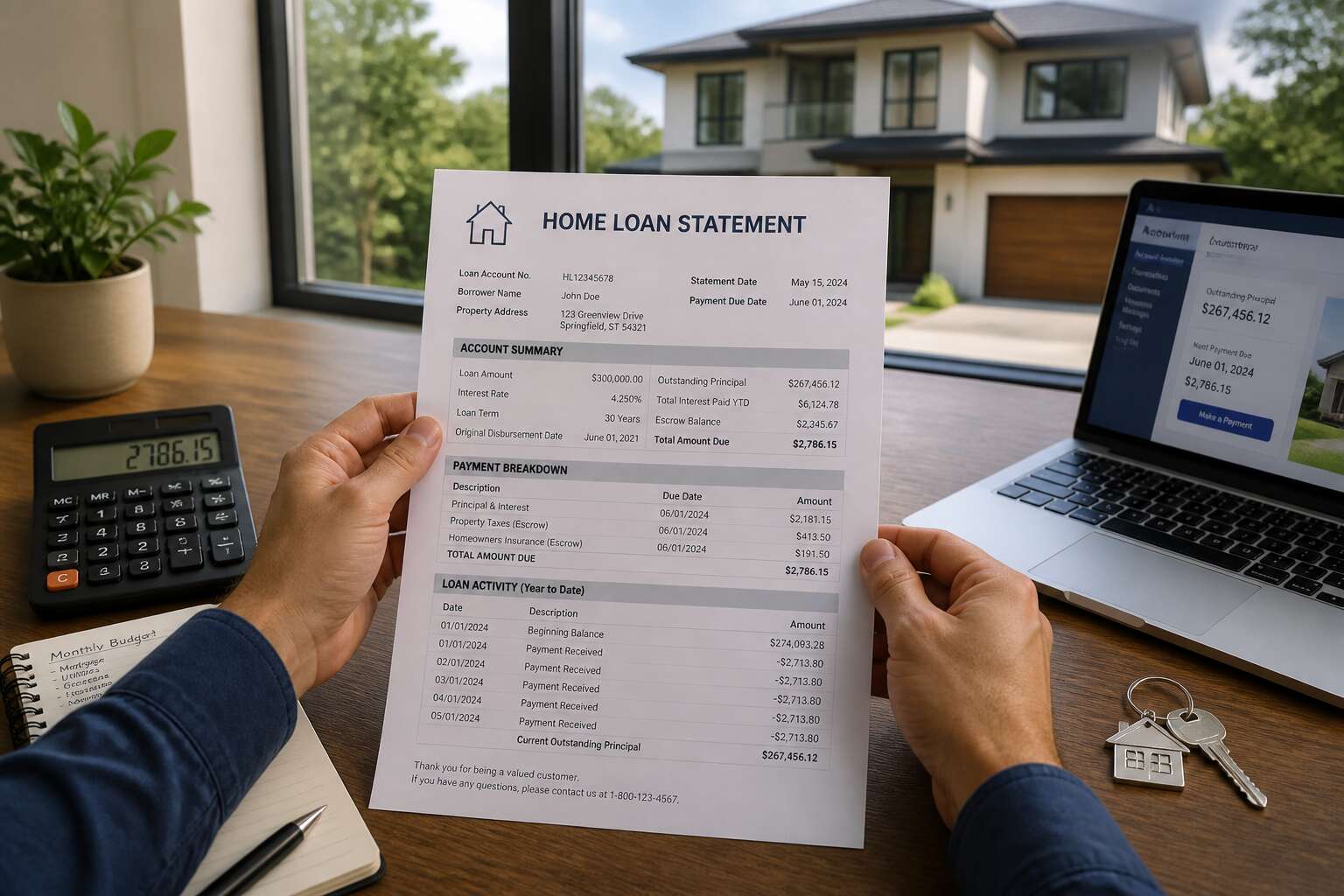
Your absa home loans statement explained simply.
How to Read Your Absa Home Loan Statement
Understanding the Key Components of Your Statement
Your absa home loans statement contains many numbers, but reading it is straightforward. Start with the interest rate. Absa adjusts this rate based on your loan-to-value ratio. A single point drift can shift your interest bill by thousands. Then check the payment split. This shows how much of your installment goes toward principal versus interest. I always look here first. It reveals whether early payments are reducing your debt or just covering accrued interest.
The statement also flags arrears. Watch for these indicators:
- Arrears status
- Unpaid balance
- Current interest rate
- Payment due date
Each field contributes something important. Understanding them helps you avoid missed payments and hidden fees.
Interest Rates and Payment Breakdown
Once you have reviewed the arrears indicators, the real story sits in the interest rate and the payment breakdown. Your absa home loans statement quotes a nominal annual rate, but interest accrues daily on the unpaid balance. A half percent movement can shift your yearly interest bill by thousands.
To read the payment split, take the interest charged for the month and subtract it from your installment. The remainder is the principal portion. In the early years of a bond, that principal shows a modest reduction. Over time, it accelerates. I track how much principal each payment erases. A growing principal share means your equity is rising. A shrinking one suggests a rate hike or an overdue amount.
The effective annual rate, which includes admin fees, gives the truest cost. Comparing these figures on your absa home loans statement each month prevents confusion and keeps you in control.
How to Identify Errors or Discrepancies
Every absa home loans statement tells a story in numbers, but only if you know where to look. The first step is to verify the basic data. Your name, bond number, and property address must match your records. A single typo can lead to misapplied payments.
Next, scan the transaction history. Every charge should have a clear code and date. If anything looks foreign, call the bank before paying the next installment.
- Check the statement date against your payment calendar.
- Verify your closing balance matches the opening balance minus your payment.
- Save each statement to compare month on month.
Errors are rare, but they are expensive when ignored. An absa home loans statement that does not reconcile deserves immediate attention. One hour of scrutiny can save years of confusion.
Why Your Absa Home Loan Statement Matters
Tracking Your Capital and Interest Payments
Your Absa home loans statement is the rare piece of paperwork that is actually worth reading. It shows the true split between capital and interest on every instalment. That split changes over time. In the early years, interest accounts for the largest share. Later, capital moves into the lead. Watching that transition is the most reliable way to measure your bond progress. It tells you how much of each payment actually reduces your debt.
Tracking your capital and interest payments also reveals the effect of extra payments. A lump sum or an increased monthly amount shows up in the new ratio on your next statement. It turns a vague sense of ownership into something you can measure. That is the real value of the Absa home loans statement.
The Impact of Interest Rate Changes on Your Monthly Instalment
Your Absa home loans statement is a direct barometer for the health of your largest debt. When the South African Reserve Bank shifts the repo rate, the ripple effects land squarely in this document, altering the monthly figures you see. A single percentage point change can add several hundred rand to your instalment for every R1 million owed, a fact that many homeowners overlook until the damage is done.
This statement acts as your early warning system in a volatile economy. It shows you precisely how the new rate cascades through your payment structure. You will see it happen across a few specific changes:
1. Your total monthly repayment amount will either increase or decrease.
2. The split between interest and capital will shift, with the interest portion absorbing the weight of the rate hike.
3. The projected payoff date on the statement may extend.
Understanding the fluid nature of these figures prevents financial whiplash. Instead of being surprised by the new amount, you can use the statement to plan for the adjustment days after the announcement. The document transforms abstract monetary policy into your personal financial reality, one line item at a time. It allows you to see the immediate monetary consequence of a decision made in a boardroom hundreds of kilometres away.
How Your Statement Reflects Extra Payments and Penalties
Your Absa home loans statement is a record of your financial habits. The extra payment, for instance, should shrink your outstanding balance. If it instead vanishes into the next scheduled instalment, your statement reveals the truth that your money has idled, not advanced. Penalties, too, get their due.
A missed payment or a broken condition appears as a named charge, itemised with clerical precision. These entries are not judgements. They are consequences of carelessness, presented without apology. Reading them regularly offers a lesson in accountability. This statement rewards attentiveness and punishes neglect.
Using Your Statement for Tax and Financial Planning
Your absa home loans statement is a document you never read. It arrives monthly, but most homeowners only glance at the outstanding balance before moving on. That is a mistake!
This document contains the interest paid, the loan balance, and the payment history, all of which matter for tax and financial planning. For example, if you work from home or let a property, the interest on your statement could be deductible. SARS expects you to prove every claim. Your statement is that proof.
It also helps you track equity growth and plan for future borrowing. I keep a digital folder of every statement. It takes ten seconds and saves hours when applying for another loan or completing tax returns. Do not underestimate this paper trail.
Preparing for Home Loan Settlements
Imagine paying off your bond and then discovering you owe R500 extra because you misread the settlement figure. That is what happens when you ignore your absa home loans statement until the final month. The statement gives you the accurate settlement amount, which is not the same as your outstanding balance. Interest accrues daily, so the amount changes every day.
Your absa home loans statement also reveals any early settlement fees or penalties. Before you make that final payment, scan the statement for these charges. Conveyancing attorneys often request a settlement letter, but your statement provides the supporting history.
- Verify the settlement date
- Confirm the final interest charge
- Check for admin fees
Each item prevents a surprise at the attorney’s office.
Common Questions About Absa Home Loan Statements
How Often Does Absa Issue Home Loan Statements?
The rhythm of your Absa home loans statement follows a steady cadence, typically arriving once a month. This monthly cycle aligns with the interest calculation period and your agreed payment date, giving you a consistent snapshot of your financial position. Most borrowers will receive their statement within the first week after the statement generation date, which is usually tied to the anniversary of your loan approval.
Monthly statements are the primary vehicle for tracking your bond, but there are exceptions to this schedule.
– Newly approved loans may generate an initial statement sooner to capture setup costs.
– Statements are also issued on demand if you request a settlement figure.
– Annual tax summaries are separate documents, though they reference your monthly statements.
Your statement date remains fixed unless you alter your debit order date. That consistency is useful for budgeting, especially when you need to verify that your payments align with the underlying capital reduction. If you prefer digital delivery, Absa’s online platform archives each monthly issue for easy retrieval. You can also request a printed copy, but the monthly cadence remains the standard for monitoring your mortgage.
How to Access Your Statement Online via Absa Online Banking
Most South Africans check their bond details long before the paper statement lands in the postbox. A quick Absa Online Banking login gives you the same absa home loans statement, refreshed daily, without the wait.
What does “available balance” mean on a bond? Can you download a PDF for your tax advisor? Is the online version identical to the printed one? These questions recur constantly. The answers live inside your digital profile.
- When does the online statement update? It reflects your latest debit order within 24 hours.
- Can you view past statements? Absa archives every issue for up to seven years.
- Can you set up email alerts for new statements? Yes, under notification settings.
To access your statement online via Absa Online Banking, log in, select your bond account, and click on “Statements and Documents”. The system generates a fresh absa home loans statement instantly. You can save it as a PDF or print it directly. No branch visit required.
What to Do If You Spot a Mistake on Your Statement
A single row on your absa home loans statement can disrupt an entire month of planning. When the numbers look wrong, most account holders ask the same two questions: who must I contact, and what evidence do I need? Start by separating emotion from arithmetic. Compare the debit order date against your bank’s payment history. Check the interest charged against the rate in your latest rate change letter. If the difference remains, reach out to Absa’s home loan division directly and mention the statement period in question. The agent will likely request a few items before opening a formal dispute.
Keep these documents ready:
- Your current absa home loans statement, saved as a PDF
- Proof of payment from your transactional bank account
- The original loan agreement or recent interest rate correspondence
Disputes typically resolve within five business days. Pending debit reversals and annual fee adjustments cause most false alarms, so ask about those first. Documentation always outweighs frustration.
How to Request a Statement for an Absa Home Loan
Many account holders assume their absa home loans statement appears automatically in online banking. That holds true for current cycles, but older records require a formal request. I have found that phoning the home loan desk and asking for a reprint works best, though a branch visit with your ID works too. The bank typically emails a PDF within a few business days.
For an older absa home loans statement, you must provide the exact period. Vague requests get bounced back. Common questions cluster around practical themes:
- How do I request a statement if I no longer use transactional banking with Absa?
- Can a reissued statement be certified for legal purposes?
- Do emailed statements carry the same weight as posted ones?
The answer to all three is yes, provided your loan remains active and your identification is in order.
Understanding Your Annual Home Loan Statement
Your absa home loans statement often raises questions that have nothing to do with numbers. For instance, if you have switched to another bank for daily transactions, you can still request a statement as long as your loan remains active. Just verify your identity through the call centre or a branch visit.
- Can a reissued statement be certified for legal purposes? Yes, branch officials can certify a reprinted absa home loans statement for bond cancellations or estate matters.
- Do emailed statements carry the same weight as posted ones? Absa treats them as valid, though some institutions insist on a stamped physical copy.
Understanding your annual home loan statement becomes easier when you know these answers. The document remains your proof, whether digital or paper.
Contacting Absa for Statement Support
A missing absa home loans statement can stall a bond cancellation or a tax submission. You do not have to wait for the annual post. Absa provides multiple support routes for statement queries, and each one moves faster than you might expect.
- Phone support handles reissuing and email delivery during the same call.
- The mobile app provides an instant PDF download.
- Branch staff can print and certify a copy for legal use.
When you contact Absa for statement support, keep your loan account number nearby. The consultant confirms your identity, then sends the document to your registered email within minutes. That digital version carries the same validity as the posted one, though some legal processes still demand a stamped original.
Tips for Managing Your Absa Home Loan Repayments
Setting Up Debit Order Payments and Payment Holidays
Your absa home loans statement can turn hostile if you ignore the rhythm of your repayments. Setting up a debit order payment is the simplest way to keep that rhythm steady. You align the date with your salary deposit, and the money leaves before you feel it. No grace period for forgetfulness. No midnight panic.
Payment holidays, however, carry a silent cost. They offer a temporary reprieve, but the interest keeps ticking. Your statement will show the deferred amount as a fresh balance. Use them only when the alternative is defaulting.
- Check your debit order date against your pay cycle.
- Confirm the holiday terms in writing before you apply.
That extra caution keeps your statement from becoming a ghost of its former self.
How to Use Your Statement to Budget for Rate Hikes
Your absa home loans statement doubles as a budgeting tool for rate hikes. When the repo rate moves, your instalment shifts. The statement shows how much room you have before that shift turns painful.
Compare the interest and capital portions across a few months. If interest is consuming more of each payment, your margin for absorbing a hike is shrinking. Calculate what a 1% increase would cost you, then weigh that against your monthly cash flow.
- Watch the interest line on your absa home loans statement every cycle.
- Use the payment breakdown to estimate your exposure to future increases.
Managing repayments means reading the statement as a forecast, not a receipt. The arrears line reveals slippage early. The capital portion shows whether you are gaining ground. Budgeting for a rate hike becomes routine once you use each statement to track the trend.
Overpayments and How They Impact Your Statement
Overpaying your bond is one of the few financial moves that shows up twice on your absa home loans statement. The capital portion drops faster, and the interest line shrinks in later cycles. The exact benefit stays hidden unless you compare the breakdown across months.
When you pay extra, Absa applies it to the principal unless you specify otherwise. Your statement records a reduced outstanding balance. That reduction compounds quietly. The interest saved never appears as a line item, but the trajectory becomes visible.
- The outstanding balance drops by more than the extra amount
- The interest portion declines in subsequent cycles
- Fees may absorb a portion of the overpayment
Some homeowners treat overpayments as a buffer. If you miss a payment later, the prepaid amount may cover the shortfall. Your absa home loans statement reflects this as a zero arrears balance, which masks the underlying risk.
Refinancing or Switching Your Home Loan Based on Statement Insights
Many homeowners never look at the interest rate on their absa home loans statement again after signing. That is a costly mistake! I have seen the difference firsthand. The document contains the exact numbers you need to judge whether your current loan still makes sense.
Look for the redemption amount and the remaining term. These two figures tell you what a new lender will need to settle. Your payment history matters too. A clean record strengthens your position when negotiating rates.
A quick checklist when using your statement for refinancing:
- Confirm the outstanding balance as of today
- Note the interest rate you are currently paying
- Identify any early termination penalties
Those details turn the document into a practical tool. The accumulated interest column shows how much you have paid over time. That context helps you judge whether a new offer actually saves you money.
Avoiding Late Payment Fees Shown on Your Statement
The late payment fee on your absa home loans statement is a silent drain on your budget. It appears without warning and erodes the equity you are building. You can avoid this entirely by understanding the precise mechanics of your repayment schedule.
The statement indicates your debit order date clearly. Ensure your available funds cover the instalment at least two business days prior. This buffer accounts for processing delays that occur between Absa and your bank. A missed debit order triggers an immediate penalty, which the next statement will show.
Here is what to check each month to prevent these charges:
– The exact debit order date and the amount deducted
– The payment status, listed as successful or pending
– Any interest penalty or collection fee already applied
Reviewing your absa home loans statement on the same day every month turns this document into a monitoring tool. The payment history section reveals your reliability. Consistent, on-time payments keep your record clean and your costs predictable. Your statement does not lie about your discipline, so use it to stay ahead of unnecessary fees.
Glossary of Terms on Your Absa Home Loan Statement
Principal Debt vs. Interest Charges
One glance at your absa home loans statement reveals a puzzling pair: principal debt and interest charges. These two terms dictate what you owe and what you pay. Principal debt is the original loan amount, reduced by every repayment. It is the true capital in your bond. Interest charges are the cost of borrowing that capital, accruing daily on the outstanding balance. The difference matters. Your monthly instalment splits between these two buckets. Early in the loan, interest charges dominate. As years pass, principal debt reduction accelerates.
- Principal debt: the capital portion you still owe
- Interest charges: the fee calculated on your daily balance
This distinction helps you track your equity. Your statement becomes a map, not a mystery.
Interest Rate Types: Prime vs. Fixed
There are two ways to price a home loan, and your absa home loans statement will tell you which one you chose. The prime rate moves with the South African Reserve Bank’s repo rate. Your instalment adjusts accordingly. A fixed rate, by contrast, stays put for an agreed period. Your statement shows that rate clearly, which is a comfort when the economy shifts.
Here is how they differ:
- Prime rate: variable, adjusted as the repo rate changes.
- Fixed rate: constant, offering predictable monthly instalments.
The choice affects how you read that statement. Prime means watching for rate announcements. Fixed means ignoring them until the period ends. Each has its own social manners.
What Is the ‘Payment Due’ and ‘Minimum Payment’?
The difference between “payment due” and “minimum payment” can cost you thousands in interest. Both appear on your absa home loans statement, yet they serve different purposes.
Payment due is the full instalment for that cycle. It covers principal and interest. Minimum payment is the lowest amount Absa accepts to keep the loan current.
Common terms on the statement:
- Payment due: the complete monthly instalment.
- Minimum payment: the floor amount required.
- Arrears: missed amounts that carry forward.
- Interest rate: the cost of borrowing.
Paying only the minimum extends the loan term. It also raises total interest.
Arrears and Credit Bureau Reporting
Arrears on your absa home loans statement is the term that signals trouble. It is the cumulative amount of missed payments carried forward from previous cycles. When you see this figure appear, it means your account is not current, and Absa will expect you to clear this balance alongside your regular instalment. Ignoring arrears is not an option, as it directly influences your credit standing.
A serious consequence of falling into arrears is the impact on your credit bureau report. Absa reports your payment behaviour, including defaults, to major credit bureaus in South Africa. This record stays on your file for a specific period and can make it difficult to secure new credit, from vehicle financing to new home loans.
Here is how the terminology connects to your overall credit health:
- Arrears on your absa home loans statement indicates missed or partial payments.
- Credit bureau reporting reflects your reliability and payment consistency.
- Clearing arrears promptly is essential to avoid a negative listing.
- A poor report can affect your ability to refinance your property.
The relationship between your monthly statement and your credit score is direct. A clean record, with consistent full payments, shows you are a low risk. Financial institutions view a history of arrears as a red flag, making it harder to negotiate better interest rates or restructure your debt later.
Understanding the Settlement Amount on Your Statement
When you open your absa home loans statement, the glossary of terms can feel like a foreign language. “Settlement amount” is the term that actually decides your financial freedom, yet it is often mistaken for a simple outstanding balance. This figure represents the total payoff required to close the bond today, including accrued interest and any legal costs.
Here is what catches homeowners off guard:
- Interest that runs up to the very day of settlement
- Unapplied credits from earlier overpayments
- Monthly service fees not yet billed but owed
Each phrase on your absa home loans statement carries weight. The settlement amount is not your capital balance. It is a calculated sum that changes daily. I have watched borrowers assume the number on the statement is the final price, then face a shock at the conveyancing attorney’s office. Read the glossary first.